Climate ActionDecent Work and Economic GrowthSustainable Cities and Communities
Hope and Resilience in Maui: A Q+A with Mayor Richard Bissen
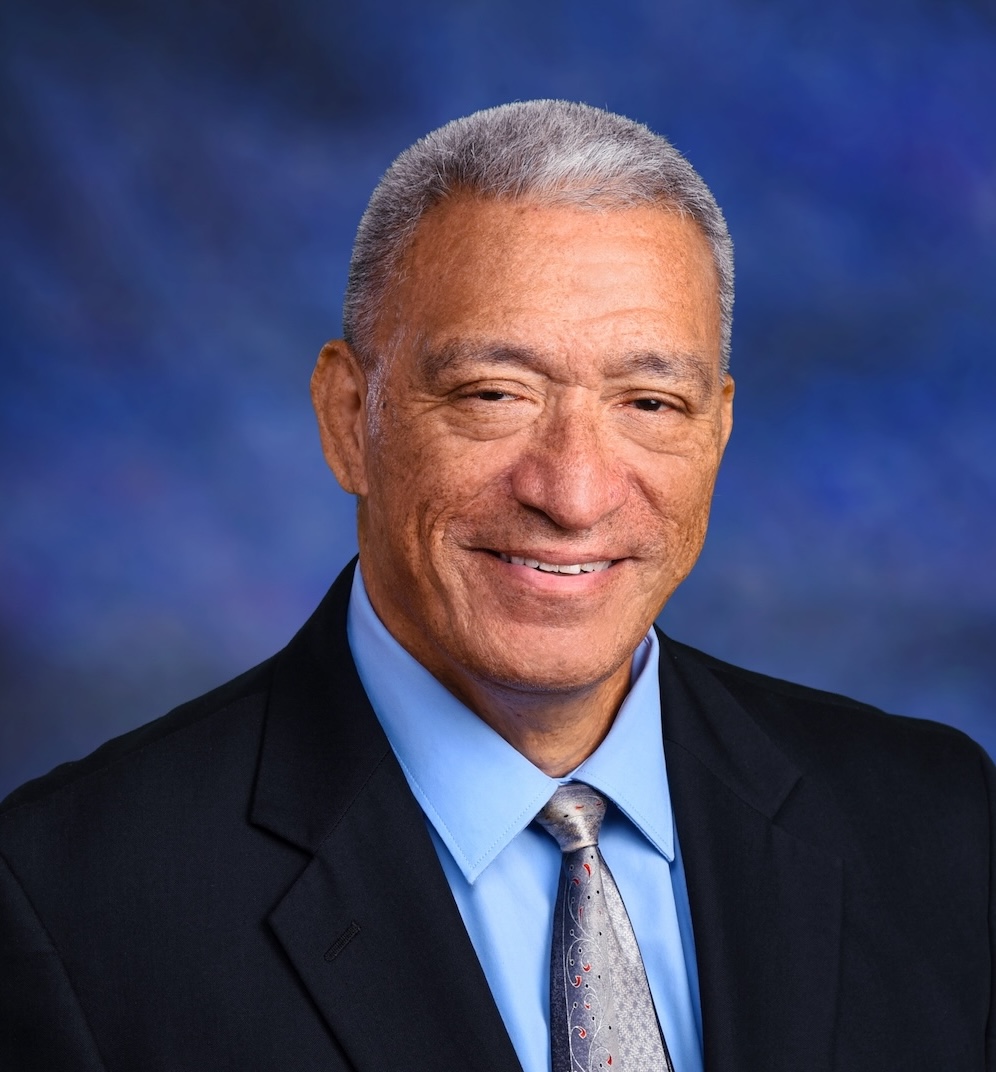
Richard Bissen, Maui, Hawai'i
Mayor of Maui County
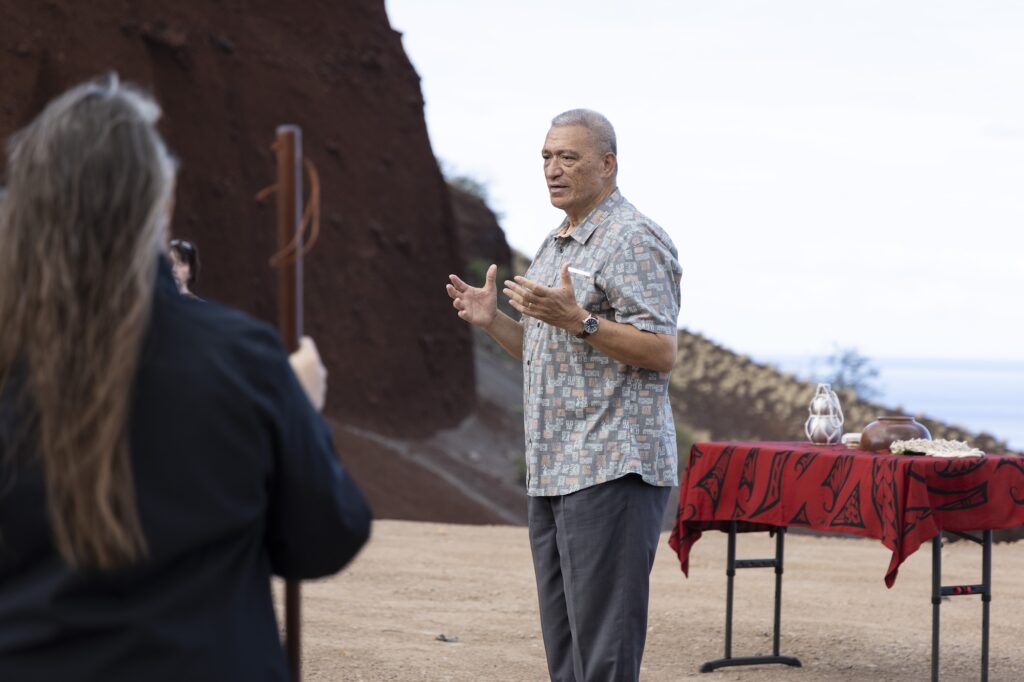
Mayor Richard Bissen is leading Maui through an era of recovery. Less than a year after he was elected Mayor of Maui County, tragedy struck when wildfires destroyed much of the Lahaina community in August 2023. This quickly brought a new priority into focus: rebuilding a more resilient community.
Hawai’i has long been a leader in sustainability and has embraced the Sustainable Development Goals (SDGs) as a framework for advancing Hawai’i’s social, economic, and environmental goals. In fact, in 2020 Hawai’i became the first U.S. state to submit their first Voluntary Local Review (VLR) of progress toward the Global Goals.
This July, Mayor Bissen traveled to UN Headquarters in New York City to submit Hawai’i’s third VLR at the annual High-Level Political Forum (HLPF) on Sustainable Development. Since the adoption of the Goals in 2015, nations gather annually to review their progress toward the SDGs.
Caroline Kleinfox, Director of U.S. SDG Policy Planning at the United Nations Foundation, sat down with Mayor Bissen to discuss how his community is putting the Goals into practice, and how they’re learning from each other – and the global community – to rebuild after tragedy.
The conversation has been edited for clarity and length.
A CULTURE OF SUSTAINABILITY
Caroline: What does sustainability mean to you and your community?
Mayor Bissen: There’s no word in the Hawai’ian language for sustainability. That’s because sustainability is part of everyday life in Hawai’i and something we’ve upheld for generations – it’s taking care of the ocean, the land, and everything that sustains us. We’re unique because we’re not just one of 50 states, we’re also part of the community of island nations. Our culture has a certain way of looking at survival, resilience, and sustainability.
The Hawai’i Aloha Plus Challenge is a statewide public-private commitment to achieve Hawai’i’s sustainability goals by 2030, and it was launched in 2014 before the development of the SDGs. There has always been alignment in the work of the 17 SDGs and what we are aiming to accomplish. Hawai’i is currently the only U.S. state that has submitted a voluntary local review, and we’ve recently submitted our third VLR review on our local SDG implementation. Our state tracks its progress towards the Global Goals on a dashboard through the Hawai’i Green Growth Local2030 Hub. We’re proud of this because we’re sharing our progress and identifying new gaps to focus on.
Caroline: Maui is a place many of us have heard of, but not all of us have had the chance to visit. Could you tell us what makes Maui special? And what values do you bring to your leadership as Mayor of Maui County?
Mayor Bissen: Our people are the most special thing about us. They’re resilient island people who are deeply rooted in their culture and know their lands, their waters, and their history. Our people understand what’s important, what it takes to survive, and how to care for each other. We’re an isolated community but the interconnectedness that happens on our island means everyone also relies on one another.
My background has always been focused on the protection of the community. I was a prosecutor for 15 years, then a criminal judge for 17 years before deciding to run for mayor. As mayor, I bring that same attitude to this job to help protect our community. I think most mayors would agree our number one priority is providing health and safety for our people.
In Maui, we’re currently focused on housing and rebuilding after the wildfires. Because of this need, we’re also paying attention to the well-being of our community including their mental and physical health. Then, we turn to saving our cultural and natural resources because we understand that we have finite resources.
A lifelong goal for us is making sure that we preserve our land for future generations. It’s a tangible responsibility to plant the tree whose shade you’ll never experience. We’ve inherited this land and we’re obligated to take care of it so that generations to come can benefit, as well.
RECOVERY AFTER THE MAUI WILDFIRES
Caroline: The 2023 wildfires in Maui became a symbol of both strength and deep loss. What lessons have the Maui community learned while rebuilding a safer and more sustainable community?
Mayor Bissen: We’ve learned a lot from communities across the United States and around the world about how to rebuild after tragedies. We’re so grateful for all the global support we received and continue to receive – the expertise, financial donations, and physical support to help rebuild Maui. Our community has stepped up in new ways and we realized we’re a lot stronger when we work together.
Rebuilding is still happening today, but we’re really focused on getting people back on their land. We’ve applied what we could to improve our infrastructure in Maui – from evacuation routes to materials we use to how we talk about safety in our towns. Our alert systems have changed to better notify people in advance and we’ve developed apps to identify which evacuation routes can be used and how. We’ve also increased the size of our emergency response units.
As I said before, our people are resilient. We’re not counting our recovery success in how many structures we can build, but how we get our own people back on their land. That’s what success would mean to us.
Caroline: As these disasters continue to unfold in island nations and across the U.S., we see subnational diplomacy at play. Cities and counties are sharing learnings with each other and developing new ties of solidarity. How do you see this playing out in Maui’s development process?
Mayor Bissen: The federal government and mayors from across the U.S. gave us strong, tangible support. The Federal Emergency Management Agency, the Environmental Protection Agency, and the Army Corps were on the ground in Maui helping us rebuild, and we received visits from former President Biden and Homeland Security officials to pledge and demonstrate their support.
Mayors from across the U.S. also supported us, especially from California where they are very experienced with wildfires. The state’s fire service, CAL FIRE, sent people to Maui to step into specialty positions in the field and lent emotional and leadership support to our community. My team is planning to go to Los Angeles to meet with Mayor Karen Bass to share what we learned about infrastructure and working with federal agencies so that we can help them in return.
We want to continue offering that same support from Maui to others who experience disasters. We don’t want to impose on anyone, but it’s important for leaders to connect when they are going through similar hardships. Of course, not every remedy will work for every community – and we’re not experts, we’ve just experienced similar things – but even if one practice makes a difference it’s worth it.
REPRESENTATION AND HOPE
Caroline: What is the role of young people in this moment as you deepen collaborations with other places in the U.S., and globally?
Mayor Bissen: Young people’s value and insight cannot be overlooked. In Hawaiian, the word “akamai” means to be intelligent. We live out that word by listening to the young people who come to address us. You can ask anyone and they will tell you that young people know what they’re talking about. As the government, the currency we deal in is trust. These young people will be our leaders, so we need to set the example for them. That means following through on our promises and including their voices because they are going to inherit what we leave behind.
Hawaiians rely on the wisdom of our elders and the energy of our youth. We’re seeing this in Lahaina where youth are leading and lending their voices. We often forget that young people worry too, and that they worry about things that are different from us. Listening to their voices will clue us in on whether we’re aligned on the path forward or if we’ve missed something that they can fill the gaps on. There’s a saying: If you want to move fast, you move alone. If you want to move more completely, you move together.
Caroline: As you look ahead, what gives you hope?
Mayor Bissen: The strength of my Maui community gives me the biggest hope. While we recognize that we may have our differences, we all want the same thing – to live in a safe place that we can pass onto the next generation.
As part of the global community, we need to build connections and trust with other countries to effectively share our successes and failures about recovering from tragedy. That’s where the 17 SDGs come in. Together, we need to do the work today to be able to keep our promise to pass on a better world than we found. The ultimate goal is to use our connectedness to improve everyone’s position – and that starts with local communities.
For further reading, check out Kinohi Souki’s story: Click here.
ADDITIONAL VIEWING
Advancing the Global Goals in Hawai’i: A Conversation with Maui County Mayor Richard Bissen Watch highlights from UN Foundation’s conversation with Mayor Bissen below.
The Road to 2030: Advancing the SDGs in Hawai’i Learn more about Hawai’i’s rich culture of sustainability, featuring Mayor Bissen, Kalani Kaʻanāʻanā, Chief Executive Officer, Hawai’i Green Growth, and Mahina Paishon, Co-Founder and Strategies, ʻĀina Aloha Economic Futures.
– Faith Williams, United Nations Foundation
“
It’s a tangible responsibility to plant the tree whose shade you’ll never experience.
As the American Leadership on the Sustainable Development Goals (SDGs) initiative comes to an end, we reflect on this project’s success and the ambition of achieving the SDGs in the United States and beyond.
Clean Water and SanitationLife Below WaterLife on LandSustainable Cities and Communities
A full-time Master Naturalist in Maryland, Alison Milligan uses native plants to create sustainable landscapes and preserve waterways for life to thrive on land and water.
Affordable and Clean EnergyClimate ActionPartnerships for the Goals
A 2020 UN Young Leader and producer, singer-songwriter, and entrepreneur, AY Young brings clean energy and the Sustainable Development Goals to communities around the world through his battery-powered concerts.